
Sale! -20%
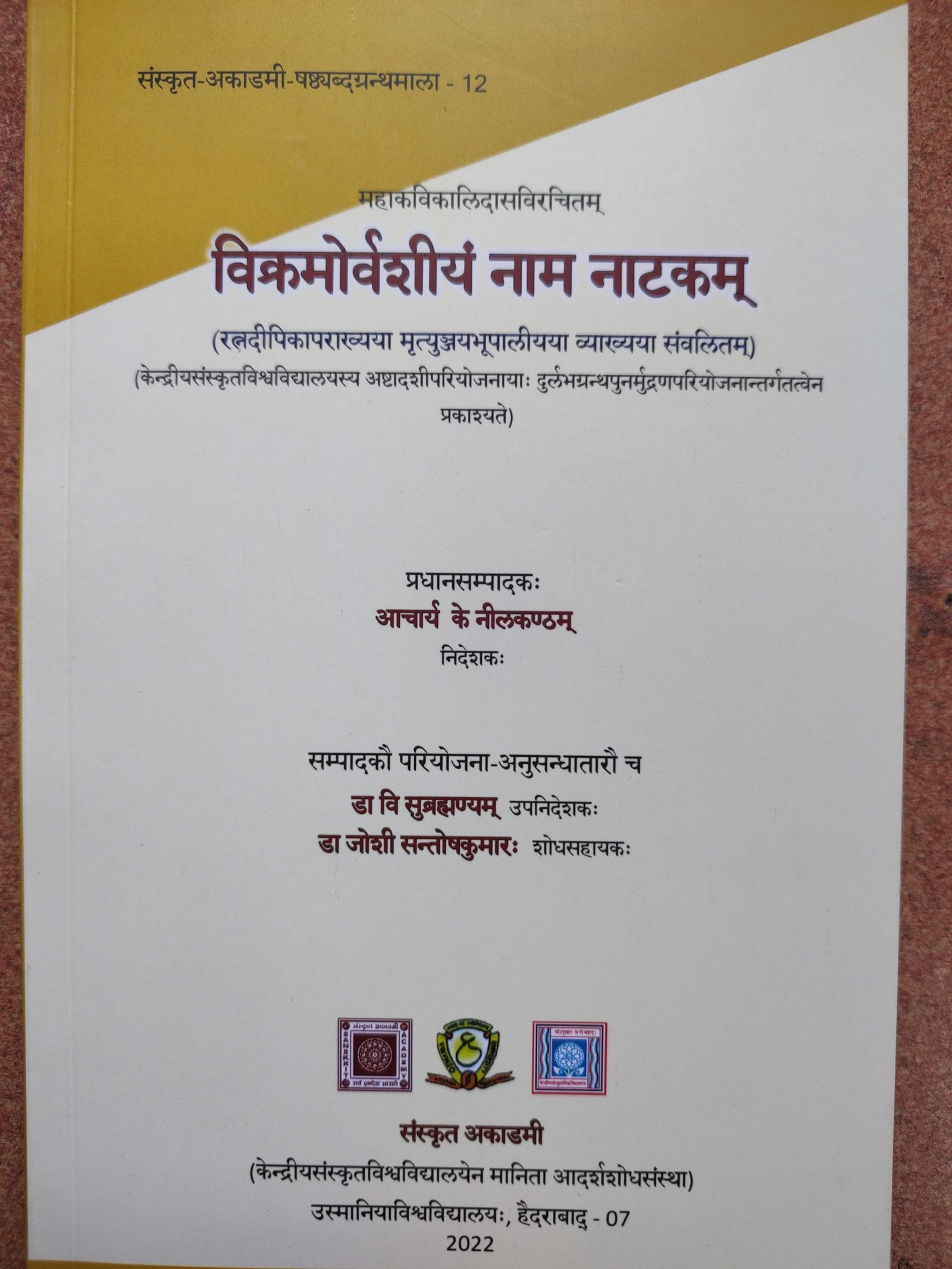
Vikramorvasiyam naama Naatakam
Original price was: ₹400.00.₹320.00Current price is: ₹320.00.
Description
Vikramorvasiyam Nama Natakam
Author – Ratnadipikaparakhyaya mrtyunjayabhupaliyaya vyakhyaya samvalitam
Chief Editor – Prof K Neelakantham, Director, Sanskrit Academy
Editors – Dr. V. Subrahmanyam, Deputy Director
Dr. Joshi Santosh Kumar, Research Assitant
Preface
Vikramorvasiyam Nama Natakam, written by an eminent Telugu and Sanskrit Scholar named Mrutyunjaya Nisshanka BhupAla, is an excellent commentary on the Mahakavi Kalidasa’s Drama/Natakam Vikramorvasiyam. This book was originally published first in Telugu script by वर्तमानतरङ्गिणी मुद्राक्
Mrutyunjaya Nisshanka BhupAla was said to have belonged to Sangamavalasa Samsthanam, (सङ्गमवलससंस्थानम्) which is located near Vishakhapattanam and Parvatipuram of Andhra Pradesh. Nisshanka, with the help of his maternal uncle, went to Vishakhapattanam in his childhood and learnt many Shastras under a revered Scholar Mahamahopadhyaya Sriman Paravastu Venkata Rangacharyulu. He gained mastery over several languages like Sanskrit, Telugu, and English and also mastered the Shastras like Sahitya, Nyaya, Vyakarana in addition to Astrology, Medicine, Architecture, Music and some other arts.
Mrutyunjaya Nisshanka was a great poet and commentator in both Telugu and Sanskrit. He wrote 10 Kavyas and one drama in Telugu
Mrutyunjaya Nisshanka BhupAla in the beginning of commentary says that his commentary is free from any ambiguity and it is written in easy and understandable Sanskrit only to facilitate the learners. Studying carefully the whole commentary we have observed that Mrutyunjaya Nisshanka BhupAla has taken utmost care to explain the graceful language of Mahakavi Kalidasa. He quoted Koshas and Panini’s sutras abundantly in the commentary for the convenience of the learners
Kalidasa is the most celebrated poet in the history of India and lived during the classical Gupta Period. He was also one of the Nine Gems (Navaratna) in the court of King Vikramāditya. Mahākavi Kālidasa perfected the Kāvya style and the art of poetry in Sanskrit. “A Poetic Genius” of using simple yet powerful language, emotions, imagination, style, diction. He was very much acquainted with the Vedas, Upanishads, Purāņas, medicine, astronomy etc. He does not speak much about himself in his works speaks of modesty and humility. This very fact brings him to the category of ‘Great’ poets. His known works include three lengthy narrative poems, and three plays: Malavika and Agnimitra, Urvasi Won by Valour, and the famous Shakuntala (also The Recognition of Shakuntala). Kalidasa’s poetry has been praised for its beauty and “limpidity” or a kind of transparency. The Recognition of Shakuntala(Abhigyana Shakunthalam), or more often just Shakuntala, is regarded as the epitome of Sanskrit dramas. The fairytale-like play in seven acts, this fantastic and complex world is described with poetic brilliance.
Additional information
| Weight | 0.352 kg |
|---|
Reviews
There are no reviews yet.